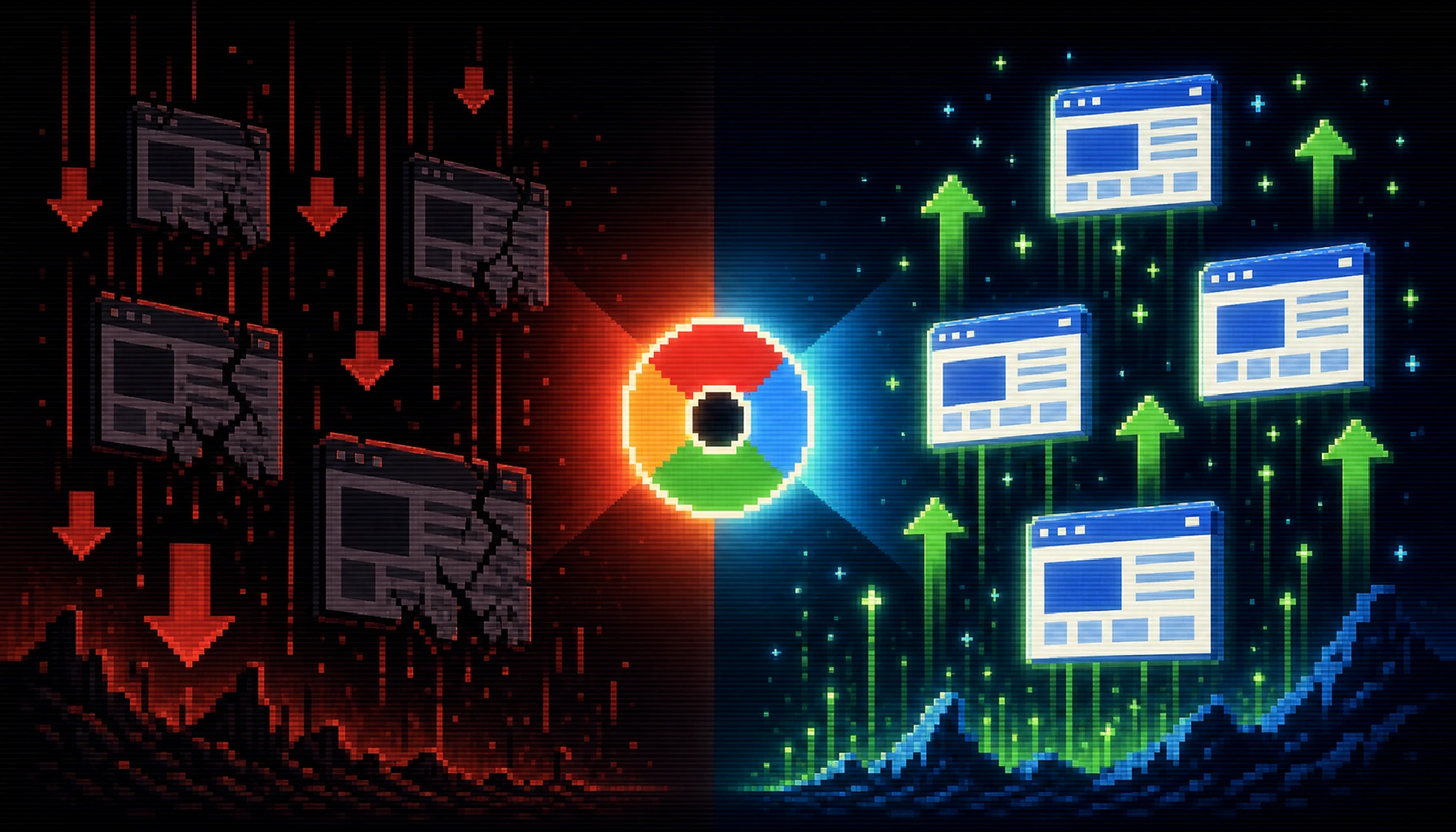
On Friday, June 19, 2026, significant ranking movement was reported across SEO forums and practitioner communities. Google has not confirmed any named update. Tracking tools were largely quiet, but the chatter — especially in black-hat SEO forums — pointed to traffic drops of 30–50% for sites using manipulative tactics. Clean-site owners may have picked up ground, but should verify. Here's what we know and what to watch.
What Happened
Around June 19, 2026, SEO practitioners in both white-hat and black-hat communities began reporting fresh ranking volatility. Key characteristics based on community reports:
- Impact concentrated on black-hat and spam tactics — Black-hat forums showed elevated chatter about significant traffic losses. White-hat practitioners reported mostly neutral or slightly positive movement.
- Tracking tools showed relative calm — Major volatility trackers (Semrush Sensor, Mozcast, SERPstat) did not register a major event.
- Reports of 30–50% traffic drops for sites using link manipulation, thin content, or aggressive affiliate practices.
- Google has not confirmed any update as of June 22, 2026.
Why the Trackers Missed It
Tools like Semrush Sensor and Mozcast measure a fixed, largely US-centric sample of keywords on a daily cadence — and they do not sample AI search surfaces at all. An update that targets black-hat or spam sites specifically, a narrow vertical, EU/international traffic patterns, or AI Overviews results, would fall almost entirely outside the trackers' sampling frame. When practitioners experience this type of targeted movement, tools go quiet and forums go loud. That divergence is itself a signal.
Important Context: What Else Happened in June 2026
This movement doesn't exist in isolation. Two confirmed policy changes preceded it:
- AI citation manipulation became spam (May 15, 2026) — Google added an explicit rule treating bought or manipulated citations in AI Mode and AI Overviews as spam — the same framework as inauthentic backlinks.
- Back button hijacking enforcement began (June 15, 2026) — Sites using navigation manipulation became targets for manual actions and algorithmic demotions.
Whether the June 19 movement is related to these policy enforcements, or is a separate unannounced algorithmic action, is not confirmed. The timing is circumstantial but notable.
Why It Matters for Your Rankings
Unconfirmed updates matter for clean-site owners for two reasons:
- You may have gained ground without knowing it. If competitors were using black-hat tactics and lost rankings, you may have moved up — but you'll only know if you check.
- The pattern reinforces what Google is prioritizing in 2026. Between the May 2026 Core Update, the AI spam policy, the back button hijacking enforcement, and now this movement, the trend is clear: Google is tightening its anti-spam enforcement across both traditional and AI search. Clean, user-first sites are the intended winners.
Step-by-Step: What To Do About It
Step 1: Check Your Traffic in the Last 7 Days
Log into Google Analytics or Search Console. Compare June 19–22, 2026 to the same period a week earlier. Are you up, down, or flat?
Step 2: Check for Ranking Changes on Key Pages
Use Search Console's Performance report or a rank tracker to check your most important keywords from June 17 onward. If you see ranking improvements, this may be residual benefit from competitors losing ground.
Step 3: Identify Any Traffic Drops (If You Have Them)
If your site is seeing drops: check if they're concentrated on specific pages or site-wide, look at which keywords dropped, and cross-reference against the back button hijacking policy — you may have a compliance issue.
Step 4: Audit Your Link Profile
Black-hat targeting often means Google is devaluing or penalizing manipulated link profiles. Use Search Console or a tool like Ahrefs to identify any sudden loss of referring domains (others getting penalized can affect you if they linked to you), and check for any spammy inbound links you should disavow.
Step 5: Audit Any AI Citation or AI Visibility Tactics
If you or an agency has run campaigns to "get cited" in AI Overviews through third-party services, review those immediately. Google's May 15 spam policy makes AI citation manipulation a direct spam violation.
Step 6: Reinforce Your Clean-Site Signals
Regardless of what caused the June 19 movement, use this as a trigger to review: content quality (is every page genuinely useful?), backlink profile (any links you'd be embarrassed to explain to Google?), user experience (no manipulation, fast load times, no intrusive interstitials), and technical health (broken links, redirect chains, crawl errors).
Step 7: Monitor Through July
Unconfirmed movements sometimes precede confirmed updates by a few days or weeks. Watch your rankings closely through July 2026 and be ready to adapt if a formal update is announced.
Common Mistakes to Avoid
- Assuming tool silence means no update — Trackers have significant blind spots. Forum and practitioner reports are a real signal.
- Ignoring traffic gains — If you're up, investigate why. Understanding what moved in your favor helps you double down on the right things.
- Waiting for Google to confirm before acting — Google never confirms unannounced movements. Treat credible community reports as reason enough to audit your site.
- Blaming competitors for your drops — If your clean site is dropping, look internally first before assuming negative SEO.
Quick-Win Checklist
- Pull Search Console data for June 17–22 and compare to June 10–16
- Identify any pages where rankings shifted ±5 or more positions
- Check Google Analytics for traffic changes on June 19–22 specifically
- Audit your link profile for any suspicious inbound links
- Confirm you're not using any AI citation manipulation services
- Check back button hijacking policy compliance
- Set a monitoring alert for significant ranking changes through July
- If you gained traffic, note which pages and keywords improved — reinforce those pages