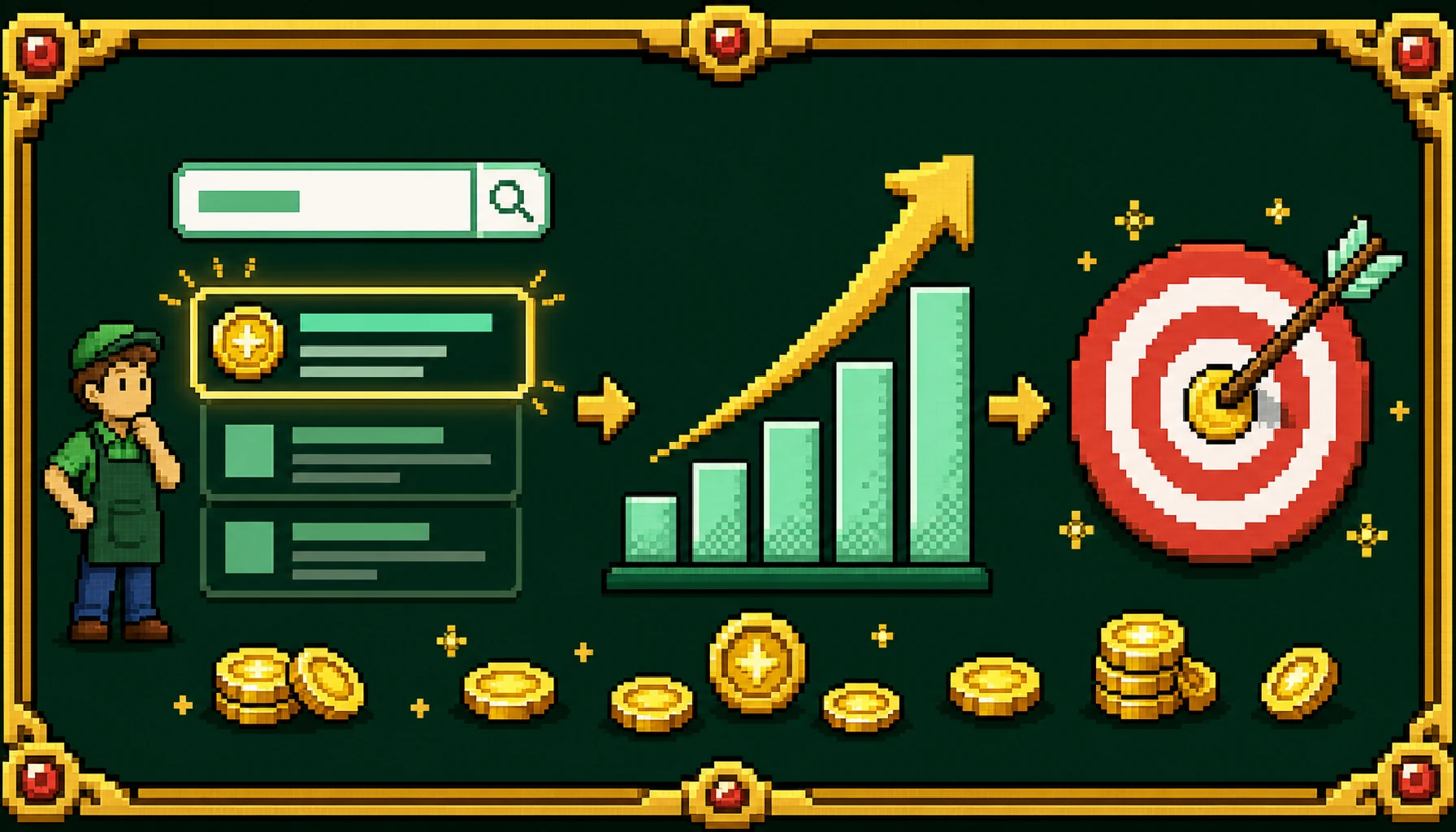
Most small business owners try content marketing the wrong way: they write a blog post, share it once on social media, watch nothing happen, and conclude it doesn’t work. The problem isn’t content marketing — it’s the absence of a strategy. A random blog post is not a strategy. A strategy is a repeatable system for attracting the right people, earning their trust, and converting that trust into business — without paying for every click. This guide builds that system step by step. It is the tactical companion to the JSB Media Plan – Content Marketing pillar.
Why Content Marketing Works for Small Businesses (When Paid Ads Don’t Scale)
Paid advertising is fast but linear: you spend $500, you get $500 worth of traffic, then it stops. Content compounds. A well-optimized article, video, or email sequence you publish today can keep attracting customers twelve months from now — without you spending another dollar on it. That asymmetry is what makes content marketing the right long-term bet for a small business with limited budget and unlimited expertise in what it does.
The other advantage is trust. A potential customer who finds your business by reading a guide you wrote already believes you know what you’re talking about. That’s a warmer lead than someone who clicked an ad. Pair that organic credibility with a paid search campaign to capture immediate demand, and you have both speed and compounding growth working for you.
Step 1: Know Exactly Who You’re Writing For
Before you write a single word, answer these three questions about your ideal customer:
- What problem are they trying to solve? Not what you sell — what they are Googling at 10 p.m. when something is broken, expensive, or unclear.
- What do they already know? A first-time homeowner asking about roof repairs needs different content than a property manager overseeing 40 units.
- What makes them hesitate? Price, trust, complexity, or past bad experiences with competitors are all content opportunities.
Write those answers down. Every piece of content you create should speak directly to one of those three areas. Content that tries to appeal to everyone appeals to no one.
Step 2: Build a Topic List From Real Questions
The best content answers questions your ideal customers are already asking. Here is where to find them:
- Google autocomplete. Type your service or product into Google and read the suggestions. Those are real searches.
- Google’s “People Also Ask” boxes. Every question in that box is a potential blog post title.
- Your inbox and call log. Every question a customer has asked you is content gold. If one person asked, hundreds are Googling it.
- Reddit and Facebook Groups in your niche. Look for recurring frustrations and misunderstandings.
- Your competitors’ blog sections. See what they’re writing about, then write something better and more specific.
Aim for a list of 20 to 30 topics before you write anything. This becomes your content backlog — you’ll never stare at a blank page wondering what to publish.
Step 3: Choose One Primary Content Format
Content marketing does not require you to do everything. Pick one format you can execute consistently and do it well:
- Blog posts / articles — best for search engine discovery; works for businesses whose customers research before buying.
- Email newsletters — best for nurturing existing relationships and driving repeat business; see the JSB Email Marketing guide for how to build this channel.
- Short-form video (Reels, TikTok, YouTube Shorts) — best for businesses that demonstrate skill visually: contractors, chefs, stylists, trainers.
- Long-form video / podcast — best for established audiences who already trust you and want depth.
A local plumber does not need a podcast. A business consultant probably should not bet everything on TikTok. Match the format to where your customers actually spend time and what you can produce without burning out.
Step 4: Create a Simple Content Calendar
Consistency beats volume. Publishing one high-quality piece per week for six months outperforms publishing five pieces in January and nothing after that. A content calendar does not need to be complex — a simple spreadsheet with three columns is enough:
- Topic / working title
- Target keyword or question
- Publish date
Block two to three hours per week on your calendar to create content. Treat it like a client appointment. The businesses that get results from content marketing are the ones that show up on schedule even when it feels like nobody is reading yet. Organic search traffic typically takes three to six months to build — the calendar keeps you going through the lag.
Step 5: Use AI to Draft, Not to Think
AI writing tools can produce a 1,000-word article in seconds. The problem is that generic AI content reads like generic AI content — search engines are getting better at recognizing it, and customers definitely can. The right way to use AI in content creation is as a drafting accelerator, not a replacement for your expertise:
- Write a rough outline based on what you know from your own experience.
- Ask an AI to draft sections based on your outline and specific talking points.
- Edit heavily: add your real examples, your specific numbers, your opinion, and your local knowledge.
- Remove anything that sounds generic or that you couldn’t defend in a conversation with a customer.
Your competitive advantage is not the ability to produce words — it is the 10 or 20 years of domain knowledge you have built. AI drafts from public information. You write from experience. The combination of AI speed and your expertise is what creates content that ranks and converts.
Step 6: Optimize Every Piece for Search
A great article that nobody can find does not grow your business. Basic search optimization for each piece you publish:
- Include the target keyword in the title, first paragraph, and at least one subheading. Do not force it — write naturally and it will appear where it belongs.
- Write a clear meta description (the sentence that shows under your title in search results). Make it specific and include the keyword. This affects click-through rate more than rankings.
- Use descriptive headings (h2, h3) that answer follow-up questions. A well-structured article that answers multiple related questions captures more search traffic than one optimized for a single phrase.
- Link to your other related content. Internal links help search engines understand your site’s structure and keep readers on your site longer.
- Add one image with descriptive alt text. It improves accessibility and provides a small SEO signal.
For WordPress users, the JSB WordPress SEO guide covers the technical side of this in detail.
Step 7: Distribute and Repurpose Every Piece
Creating content is half the job. The other half is making sure people see it. A single blog post can become:
- Three social media posts (quote the key insight, share the headline with a question, post a summary thread).
- One email newsletter section (link to the full article, tease the key takeaway).
- A short video where you talk through the main points.
- A FAQ addition to a product or service page.
This is how small teams compete with larger competitors who have full marketing departments: one piece of content, distributed in five formats, reaches five different audiences without five times the work. Build this repurposing habit from your first publish, not after you’ve grown a big audience.
Step 8: Measure What Actually Matters
Vanity metrics (page views, social followers, impressions) feel good but do not pay rent. Measure these instead:
- Organic search impressions and clicks in Google Search Console — this tells you whether your content is showing up in searches and whether people are clicking.
- Email subscribers added per month — content’s job is to convert readers into an audience you own. See email marketing for why the list matters more than followers.
- Leads or sales attributed to content — which articles or videos are people reading before they contact you? Ask new customers how they found you.
- Time on page — if people leave in 20 seconds, your content is not answering what they came for.
Review these numbers monthly, not daily. Content marketing is a long game. The businesses that quit after three months never see the compounding that starts around month four.
Common Mistakes Small Businesses Make With Content
- Writing about the business instead of the customer’s problem. Nobody searches for “[Your Company] is great.” They search for their problem. Meet them there.
- Publishing once and expecting traffic. Search takes time. The algorithm has to find your content, index it, test it against competing pages, and gradually rank it. Publish consistently and wait.
- Ignoring existing customers. Content marketing is not just for new leads. A how-to guide that helps current customers get more from what they bought reduces support costs and increases referrals.
- Treating every channel equally. Pick one or two channels and dominate them before spreading thin. Two good posts a week on your blog beat half-hearted activity on six platforms.
- Not having a call to action. Every piece of content should tell the reader what to do next — subscribe, book a call, read a related article, download something. Content without a next step leaks value.
The Content Marketing Flywheel
Content marketing, email marketing, SEO, and paid ads are not separate campaigns — they reinforce each other. Your blog content attracts organic search traffic. An email opt-in captures that traffic into a list you own. Your email newsletter drives repeat traffic back to new content. Paid ads accelerate discovery for your best-performing pieces. And the audience data from all of it tells you what to create next.
That is the compounding effect behind Joe’s Safe Bet Media Plan: each pillar feeds the others. Content marketing is the engine that makes the whole system self-sustaining over time — and the earlier you start, the longer it compounds.